
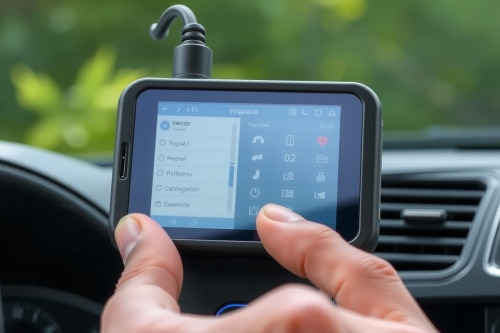
As a lead diagnostic tech, I know the pain of wheeling out a five-thousand-dollar scan tool just to pull a quick check engine light on a busy morning. That's why I started diving into real Veepeak OBDCheck BLE reviews to see if this budget dongle could handle quick triage on my rolling cart. We tested this Bluetooth adapter across dozens of customer cars to find out if it saves actual bay time or sends you down a diagnostic rabbit hole.

Real shop testing and Veepeak OBDCheck BLE reviews
When you are busting knuckles for a living as a flat-rate tech, efficiency is everything. Last month, a stubborn Ford F-150 rolled into my bay with a random misfire code P0300 that only popped under heavy load. Instead of spending ten minutes booting up my massive console tool, I grabbed the Veepeak OBDCheck BLE from my top drawer and plugged it into the DLC port under the dash.
Using the Car Scanner ELM OBD2 app on an iOS device, the Bluetooth 4.0 low energy connection established within five seconds. I was able to log live cylinder misfire counts while taking the truck for a quick road test around the block. Identifying the failing coil on cylinder four so quickly kept the job moving and helped in preventing comebacks before lunch.
Hardware build quality and wireless performance
The physical adapter is compact enough to stay out of the driver footwell during test drives. Unlike older Bluetooth devices that demand manual pairing pin codes in your phone settings, the BLE protocol connects directly inside your chosen diagnostic app. This seamless connection saves frustration when switching between Android phones and iPads on the shop floor.
However, no budget tool is perfect. The data refresh rate over Bluetooth LE is adequate for monitoring coolant temperature or fuel trims, but it slows down when graphing more than four live PIDs simultaneously. If you need high-speed oscilloscope functionality, you still need a dedicated shop wire harness.
App compatibility and deep PID diagnostic capabilities
The real power of this hardware comes from third-party software integration. It pairs effortlessly with popular apps like BimmerCode for BMW coding, FORScan Lite for Ford modules, and Torque Pro for general sensor logging. Having a versatile OBD2 Scanner on hand allows you to code modules or reset oil lights without pulling out heavy diagnostic equipment.
Keep in mind that the Veepeak device itself does not come with a full-featured proprietary app. You will need to download third-party software, and some advanced features like ABS bleeding or SRS resets require paid app upgrades. Being honest about these extra software fees helps set realistic expectations for your rolling cart setup.
A practical breakdown of Veepeak OBDCheck BLE reviews
When analyzing Veepeak OBDCheck BLE reviews across tech forums and shop groups, the consensus highlights its reliability for basic code clearing and sensor monitoring. It draws minimal standby power, meaning you can leave it plugged into a vehicle overnight without draining the battery. For quick pre-inspection scans, it delivers undeniable value.
The main trade-off is the lack of bi-directional control for active component testing. You can't command fuel injectors or actuate solenoids directly through basic OBD2 apps using this adapter. For deep electrical troubleshooting, a high-end platform remains necessary, but for everyday code reading, this unit punches well above its price tag.
Final verdict for working techs and home mechanics
Based on our extensive Veepeak OBDCheck BLE reviews and real-world shop usage, this dongle is one of the most cost-useful diagnostic tools available today. Whether you're a professional trying to optimize bay time or a home mechanic avoiding dealer fees, keeping this wireless adapter in your pocket makes complete sense.
If you want a dependable wireless link for mobile diagnostics, grab one for your toolbox. What diagnostic apps do you run on your phone? Leave a comment below with your favorite setup, and share this article with your fellow mechanics!