
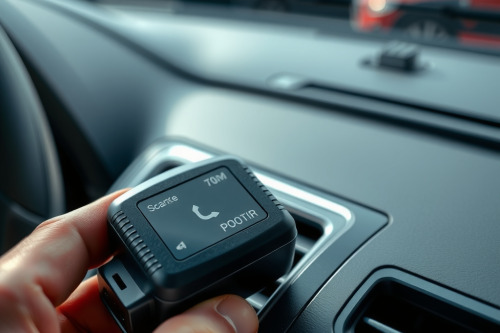
After twenty years of busting knuckles in my repair shop, I've seen diagnostic tools evolve from bulky tethered bricks into wireless powerhouses. Plugging a modern Bluetooth OBD2 Scanner into a vehicle DLC port lets you pull live sensor data and clear trouble codes straight from your phone within seconds. Stop burning billable bay time digging through blind diagnostic rabbit holes when real-time data streaming can pinpoint an intermittent engine misfire instantly. In this breakdown, we look at real shop testing to help you pick a tool that actually survives daily shop abuse.

Why a Bluetooth OBD2 Scanner belongs on your rolling cart
Tethered scan tools had their day, but dragging a thick cable across a clean interior is a recipe for scratched trim or broken connectors. A compact VCI dongle plugs directly into the under-dash port, pairing instantly to your tablet while you walk around the vehicle checking underhood components.
For any flat-rate tech, mobility equals efficiency. You can actuate a fuel pump or monitor fuel trim values while standing right next to the engine bay instead of staring at a fixed screen inside the cab.
Understanding CAN-bus protocols and live data PID streaming
Modern vehicles rely on high-speed CAN-bus architecture to transfer thousands of data parameters every second. A solid wireless adapter must handle high PID refresh rates without dropping frames or freezing mid-stream.
When reviewing live data, fast sample rates make all the difference. If your scanner only updates twice per second, you'll completely miss brief spikes in oxygen sensor voltage or momentary drops in fuel rail pressure under heavy load.
Real shop testing on a stubborn Ford F-150 misfire
Just last Tuesday, I had a stubborn Ford F-150 roll into my bay with an intermittent misfire under load and no active check engine light. I plugged in our shop Bluetooth OBD2 Scanner and set up a custom live data dashboard for mode 06 cylinder misfire counts.
During a short road test, the real-time graph immediately flagged cylinder four dropping fire only when the torque converter locked up. The tactile click of the VCI latching into the DLC gave me confidence in the connection, and the quick diagnosis saved me hours of swapping ignition coils blindly.
Comparing dongle latency and VCI connectivity issues
Not all wireless adapters are built for heavy workshop environments. Cheap consumer dongles often suffer from severe Bluetooth latency, slow reconnection after cycling the ignition, and flimsy plastic housings that crack when dropped on shop concrete.
Professional units feature ruggedized, rubberized casing and dedicated pairing chips that stay connected even when working under heavy metal dashboards. Never compromise on hardware reliability when billable hours are on the line.
How a Bluetooth OBD2 Scanner cuts diagnostic downtime
Preventing comebacks comes down to thorough post-repair verification. Reading freeze frame data before clearing codes gives you a snapshot of engine speed, coolant temperature, and load calculated at the exact moment the fault triggered.
Once repairs are complete, running automated system readiness tests using your phone ensures all monitor checks complete successfully. This quick verification step prevents customer complaints and keeps your bay moving smoothly.
Choosing the right wireless diagnostic setup for your shop
Before buying your next diagnostic interface, evaluate software subscription costs, vehicle coverage depth, and bi-directional test capabilities. Make sure the companion application supports important coding, steering angle resets, and electronic parking brake retraction if you service multiple vehicle makes.
Inspect your current diagnostic routine today, invest in a high-refresh wireless adapter, and experience how much faster you can turn bay space into profitable repairs.