
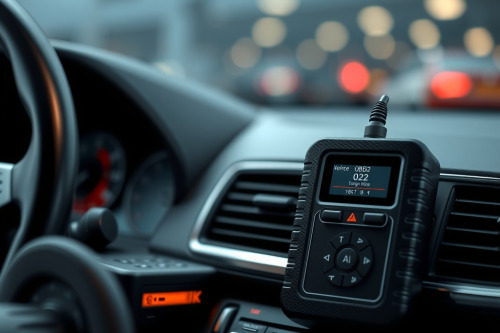
After twenty-five years of busting knuckles on everything from rotted farm trucks to high-end European sedans, I can tell you that a dependable OBD2 car scanner is the absolute backbone of modern troubleshooting. When a customer rolls into my bay with a glowing check engine light and a rough idle, pulling clean live data saves me hours of useless part-swapping. Hooking up a dependable diagnostic rig gets you straight to the root mechanical cause before you ever touch a wrench. Cutting through the noise with real-time sensor streams keeps your shop efficient and prevents costly comebacks.

Why an OBD2 car scanner is important for live data
Reading fault codes is only the first step when diagnosing a complex drivability issue. A basic code reader might throw a code for a lean mixture, but a real technician looks at short-term and long-term fuel trim values to see what the engine control module is really doing. Watching oxygen sensor voltages respond in real time while snapped under load gives you instant clarity on Whether you're chasing a vacuum leak or a failing fuel pump.
Freeze frame data captures the exact engine parameters the moment a trouble code sets. When an intermittent stumble occurs under high load, checking coolant temperature, engine load, and manifold pressure during that specific frame keeps you from guessing. Rolling a diagnostic cart to the vehicle and graphing multiple PID parameters side-by-side reveals sensor lag that simple numerical readouts completely miss.
Bi-directional controls and active test routines
Static diagnostic reading only gets you halfway through a repair. Modern diagnostic tools must trigger components directly from the tablet interface. Actuating an EVAP purge valve, cycling a fuel pump relay, or performing an ABS automated bleed directly from the driver seat cuts down billable bay time drastically.
When an active component fails to respond during a drop test, you can immediately isolate whether the fault lies in the wiring harness, the module driver, or the actuator itself. Having full bi-directional capability transforms your workflow from educated guessing to definitive proof, eliminating phantom component replacements.
Hands-on shop experience with a stubborn Ford misfire
Just last Tuesday, I had a stubborn Ford F-150 in my bay with an intermittent misfire under load. The customer had already thrown fresh spark plugs and two aftermarket ignition coils at it, yet the engine still shuddered under hard acceleration. Code P0300 was stored in history, but no single cylinder was explicitly flagged by the onboard computer.
I hooked up my handheld diagnostic tablet, grabbed the heavy rubberized casing, and booted up live misfire counters while taking the truck on a quick road test. Watching cylinder four register steady counts only under fifty percent throttle pinpointed a weak coil driver inside the harness connection. The bright screen stayed crisp under harsh direct sunlight, and the solid VCI connection under the heavy dash never dropped signal once throughout the entire test drive.
Choosing the right OBD2 car scanner for heavy shop use
Not all diagnostic hardware can survive a commercial shop environment. Grease-covered hands, concrete floor drops, and constant battery draining require rugged housing and long battery endurance. A tool that feels slick or flimsy in your hands won't last six months on a rolling tool cart.
Software coverage matters just as much as hardware durability. Check the annual update pricing structure and verify CAN-FD or DoIP protocol support for newer vehicle platforms before making a buy. High processing speed and low latency over Bluetooth connections prevent maddening lag when logging live data streams across multi-can architectures.
Avoiding diagnostic rabbit holes on modern vehicle networks
Vehicles today feature dozens of interconnected microcontrollers sharing data across complex networks. A simple shorted sensor can pull down an entire high-speed bus network, casting dozens of U-series communication codes across multiple systems. Plugging in a capable scan tool allows you to run full topology mapping to see exactly which module went offline first.
Understanding network topology prevents you from sliding down endless rabbit holes. Isolating a unresponsive module on the map directs your digital multimeter straight to the power, ground, and communication lines at that specific node. Resolving signal noise early stops you from wasting unpaid diagnostic hours on complex electrical gremlins.
Practical field advice for flat-rate technicians
Investing in your diagnostic battery of tools directly impacts your weekly flat-rate bottom line. Before purchasing any new diagnostic rig, ask for a demonstration unit in your own shop to test button response, boot speeds, and screen clarity under shop lighting. Test how quickly it auto-identifies VIN numbers on stubborn domestic and import vehicles alike.
Make sure to maintain your diagnostic equipment by keeping firmware updated and inspecting OBD cables for bent pins regularly. Equip your bay with an OBD2 car scanner that handles active testing and fast graphing seamlessly today to maximize throughput and boost diagnostic accuracy on every repair job.