
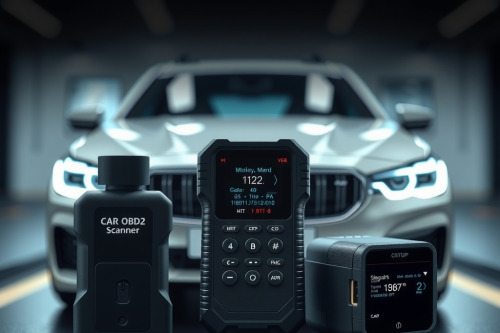
After 22 years of busting knuckles in a busy independent repair shop, I have learned that you don't need to drop five grand on a top-tier scan tool just to grab freeze frame data or clear a check engine light. A solid budget OBD2 Scanner can save your bay time and prevent costly diagnostic rabbit holes when pulling code P0300 or reading live fuel trim values on a customer car. We tested several affordable handheld readers and wireless adapters under real shop conditions to see which entry-level units actually survive real garage abuse. Here is my honest breakdown of what works, what fails, and what belongs on your rolling cart without breaking the bank.

Why a budget OBD2 Scanner belongs on every rolling cart
Every flat-rate tech knows the headache of walking across the shop floor just to borrow the main shop console. Keeping an entry-level code reader right on your cart lets you do quick triage the second a vehicle rolls inside your bay. You can instantly check readiness monitors, verify battery voltage, and pull stored fault codes without interrupting another technician.
Modern vehicles use complex CAN-bus architecture that logs pending codes long before a driver notices a drivability issue. Having a quick readout saves precious minutes during intake inspections and keeps your workflow moving efficiently. Preventing comebacks starts with quick, accurate triage right at the customer vehicle drop-off.
Real shop testing on a stubborn Ford F-150 misfire
Just last Tuesday, I had a stubborn Ford F-150 in my bay with an intermittent misfire that only showed up under load. Instead of booting up the big flagship tablet, I plugged a compact wireless VCI dongle under the heavy dash knee bolster. The rubberized housing gave a reassuring click as it seated firmly into the DLC port.
I pulled up live graphing for long-term fuel trims and watched cylinder four misfire counts rise while holding the brake pedal down in gear. The compact tool caught a lean spike caused by a subtle vacuum leak near the intake plenum. That fast read saved me an hour of hunting down ghost electrical faults.
Important features to evaluate in a budget OBD2 Scanner
Live data graphing and freeze frame accuracy
A code reader that only displays numerical DTCs is barely better than a paperclip. You need real-time data stream capabilities to track oxygen sensor voltage swings and mass air flow readings. Freeze frame data is important because it captures engine speed, coolant temperature, and load calculated at the exact millisecond the fault code set.
Protocol compatibility and vehicle coverage
Make sure the hardware supports ISO 9141, KWP2000, J1850 PWM, and modern CAN protocols across domestic, Asian, and European builds. Some cheaper adapters struggle with heavy-duty light trucks or older European imports that run proprietary bus speeds. Broad coverage keeps you from getting stranded on an old BMW or a diesel pickup.
Tactile build quality and screen readability under shop lights
A tool sitting in a professional shop takes a beating from oily hands, dropped wrenches, and concrete floors. Solid rubber overmolding and thick strain relief on the main cable determine whether a scanner lasts three months or three years. Tactile button feedback matters when you're wearing thick nitrile gloves while scrolling through menu trees.
Screen quality is another major factor when working outside under direct sunlight or under bright overhead shop bays. Monochrome backlit LCD displays often outperform cheap color screens that wash out under glare. You want high contrast text that you can read from three feet away while standing over an engine bay.
Limitations and software glitches you must expect
Don't expect these low-cost tools to perform ECU coding, module flashing, or bi-directional actuator tests. Cheap Bluetooth dongles occasionally drop connection mid-stream when interference from shop air compressors or battery chargers spikes nearby. Software applications paired with mobile tools sometimes suffer from slow data refresh rates when graphing more than four live PIDs simultaneously.
Certain Asian and European models might restrict ABS and airbag code reading to factory-level software. Knowing these blind spots prevents you from getting caught off guard when a vehicle demands deeper dealer-level diagnostic protocols. Be honest with your expectations and treat budget devices as fast triage tools rather than full shop replacement consoles.
How to pick the right budget OBD2 Scanner for your shop
If you prioritize speed and basic code clearing, a standalone handheld unit with physical buttons and a rugged cable is your safest bet. For deeper live data monitoring on your smartphone or tablet, a high-speed Bluetooth 5.0 VCI dongle provides excellent value for your diagnostic arsenal. Match the device to your daily routine so it works for your specific repair style.
Before ordering, check software update policies to make sure you'll not get hit with hidden subscription fees after a year. Equipping your bay with a reliable budget OBD2 Scanner protects your bottom line, speeds up quick checks, and keeps customer cars moving through your shop floor seamlessly. Pick the tool that fits your hands, plug it in, and start diagnosing with confidence today.