
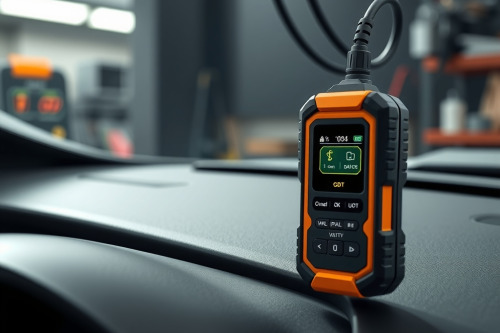
After twenty-two years of pulling wrench in my shop, I can tell you that reading fault codes only scratches the surface of real diagnostic work. When you need to pinpoint an intermittent EVAP leak or a lazy cooling fan relay without wasting hours, using a reliable OBD2 Scanner with Active Tests is the ultimate game changer. Bi-directional control lets us command ECU outputs directly, eliminating guesswork and saving precious bay time on every single job. Here's how we harness this functionality to boost shop efficiency and fix complex driveability issues right the first time.

Why bi-directional control changes the diagnostic game
Static DTC reads only inform you where the engine control module detected an anomaly. They do not tell you if the component failed, if the wiring harness rubbed through on a bracket, or if the driver circuit inside the computer went cold. That is where functional tests come into play.
When you command a purge valve to open or force a variable valve timing solenoid to cycle, you bypass sensor feedback delays. You listen for the mechanical click, monitor real-time pressure changes on your gauge, or watch the engine RPM dip. It turns a hour-long electrical wild goose chase into a clean two-minute verdict.
Moving beyond standard read-only tools
Every generic code reader can pull a P0300 misfire code. A basic scanner leaves you pulling spark plugs, swapping ignition coils from cylinder two to cylinder four, and praying the fault follows. An advanced tool lets you perform automated cylinder power balance tests on the fly.
By selectively shutting down individual fuel injectors while watching crankshaft speed variation, you identify the weak cylinder instantly. You stop busting knuckles on hot exhaust manifolds just to isolate a bad driver or plugged injector tip.
Important features of an OBD2 Scanner with Active Tests
Not all scan tools with actuation capabilities are created equal. When I'm picking a rolling cart tool for my technicians, I look at hardware durability, communication speed, and software coverage depth. A tool that lags mid-test or drops CAN-bus synchronization right when you're commanding an ABS pump auto-bleed is useless in a busy shop environment.
The physical unit needs a rugged rubber boot to survive drop impacts on concrete. The screen must be bright enough to read under direct sunlight while working on a truck on an open rack. High Bluetooth throughput on the VCI dongle is non-negotiable when crawling under a tight Chevrolet dash to plug into the DLC port.
Critical functional tests every technician needs
Your diagnostic kit should execute a wide range of bidirectional commands across powertrain, body, and chassis modules. Here are the core routines we run daily:
- Fuel pump actuation: Bypassing the fuel pump relay to verify line pressure under cranking and load conditions.
- EVAP solenoid sealing: Commanding the vent valve shut to perform manual smoke tests or monitor tank pressure decay.
- A/C compressor clutch cycle: Testing climate control requests vs hardware engagement when low pressure switches trigger faults.
- Electronic throttle body sweep: Verifying smooth potentiometer sweep without voltage dead spots across throttle blade angles.
- Cooling fan speed stepping: Actuating low, medium, and high PWM duty cycles to isolate failed resistor packs or dead fan motors.
Real shop scenario: tracing a fuel delivery failure
Just last Thursday, a 2018 Ford F-150 pulled into my third bay with a crank-no-start condition. The service writer wrote up a suspected dead fuel pump based on what the customer read online. The flat-rate tech assigned to the ticket was ready to pull the bed to access the tank module.
Before touching a single socket wrench, I plugged in our primary diagnostic tablet and navigated straight to the fuel pump driver module functional menu. I commanded the fuel pump duty cycle to 50 percent while listening near the filler neck. Nothing happened—complete silence from the tank.
Instead of ordering a six-hundred-dollar pump assembly, we switched the active command to trigger the fuel pump control unit circuit directly. The test showed zero voltage output from the module harness due to a corroded ground terminal behind the rear frame crossmember. Cleaning that ground stud fixed the truck in twenty minutes. That's how active diagnostics prevents comebacks and keeps your shop reputation pristine.
Avoiding critical mistakes with an OBD2 Scanner with Active Tests
Active testing gives you tremendous control, but commanding vehicle actuators without understanding system interlocks can lead to expensive damage. You must satisfy safety prerequisites before running any functional routine.
Never command an starter motor override or transmission solenoid shift while the vehicle is sitting in gear without chocks under the wheels. Always check clear clearance around cooling fan blades before triggering high-speed fan relays manually.
Understanding ECU safety overrides
Modern vehicles use layered control architectures. If engine coolant temperature exceeds safety thresholds, the PCM will override your manual scan tool commands to protect head gaskets. If your test drops unexpectedly, inspect live data pids for system lockouts rather than assuming your tool lost connection.
Watch out for voltage drops during active testing. Running high-amp actuators like secondary air pumps or electric power steering motors without a clean battery maintainer connected can brown out modules and corrupt ECU flash memory.
Maximizing shop ROI with advanced diagnostic tools
Investing in higher-grade diagnostic equipment pays for itself faster than almost any other shop buy. When techs cut diagnostic time from two hours down to twenty minutes, billable efficiency skyrockets. Customers appreciate quick, accurate diagnoses instead of getting billed for trial-and-error parts swapping.
Ensure your team updates scan tool software regularly. Vehicle manufacturers continuously update CAN FD protocols and secure gateway access rules. Keeping your subscription active ensures your scanner talks to brand-new models landing on your lift racks tomorrow.
Inspect your shop diagnostic fleet today, evaluate your current scan tool capabilities, and make sure every bay is armed with a capable OBD2 Scanner with Active Tests to keep your billable hours high and customer trust solid.