
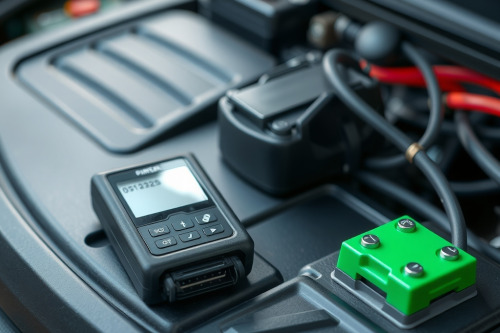
After 24 years of turning wrenches in busy flat-rate shops, I've seen standard multimeters lie through their teeth about electrical health. Using a high-end OBD2 Scanner for Battery Testing exposes live data, cranking voltage dips, and battery management system telemetry that basic handheld meters completely miss. You can instantly diagnose intermittent no-starts, track charging system ripples, and eliminate costly diagnostic rabbit holes before replacing good parts. Hooking up a solid scan tool is the fastest way to verify power health and stop wasting precious bay time.

Why relying on static multimeter voltage traps flat-rate technicians
A standard digital multimeter only tells you resting open-circuit voltage across the battery posts. Resting voltage is useless when a modern control module is trying to pull 200 amps during a cold start on a frosty morning. An old battery can sit happily at 12.6 volts with zero load, but the moment the starter solenoid engages, that chemical structure collapses down to 7 volts.
When voltage drops below 9.6 volts during cranking, control modules freak out. The powertrain control module shuts off injector pulsing while the body control module drops communication on the CAN-bus network. You end up wasting hours chasing phantom communication trouble codes across five different modules when the core fault was simply a failing power source.
The difference between static voltage and dynamic module load
Static voltage measures potential energy, not chemical reaction speed or internal resistance. Modern vehicles run dozens of microprocessors that wake up the second you unlock the door. An OBD2 Scanner displays real-time voltage as seen by the engine control module, showing you exact operating drops when systems load up.
How an OBD2 Scanner for Battery Testing reveals hidden control module telemetry
Plugging an advanced OBD2 Scanner for Battery Testing into the diagnostic port gives you direct access to internal battery management system data. Modern vehicles from Ford, BMW, and General Motors track state of charge, state of health, and internal resistance directly through a smart battery sensor mounted on the negative terminal clamp.
Just last Tuesday, I had a stubborn Ford F-150 in my bay with an intermittent no-start and a dashboard lit up like a Christmas tree. The customer already threw a brand-new battery at it, but the powertrain control module was still throwing phantom low-voltage trouble codes. I grabbed my rolling cart, hooked up the scan tool, and pulled up the battery monitor PID parameters to instantly see what was happening.
The sensor was reporting an accurate 88 percent state of charge, but the stored battery age parameter was stuck at 2,100 days. Because nobody reset the monitoring system, the smart alternator was undercharging the new AGM battery to prevent overcharging an old pack. Five minutes with the scan tool saved that customer from ruining a three-hundred-dollar battery and saved me from an annoying comeback.
Important live data parameters to monitor during engine cranking
When you dump live data onto your screen, you need to know which parameters actually matter under load. Don't just look at global ignition voltage. Set your tool to graph control module input voltage, battery state of charge, generator duty cycle, and starter motor current draw simultaneously.
Minimum cranking voltage threshold
Set your scan tool graphing sweep speed fast enough to catch the instantaneous voltage dip during key-turn or push-button start. If module supply voltage drops below 9.6 volts during cranking, the battery fails the test regardless of static voltage. Healthy starter systems will hold steady between 10.2 and 10.8 volts during starter engine engagement.
Alternator ripple voltage and duty cycle
Modern alternators don't run at a fixed output of 14.2 volts anymore. The engine control unit commands target output voltage based on ambient temperature, battery state of health, and current electrical demand. Monitoring generator field duty cycle live data shows if the charging system is overworking to support a shorted internal cell.
Step-by-step diagnostic workflow using an OBD2 Scanner for Battery Testing
First, connect your diagnostic tool to the vehicle DLC under the knee bolster and turn the ignition important to on with the engine off. Inspect screen visibility under direct sunlight and make sure your VCI dongle maintains a stable wireless link to avoid dropping data mid-test. Run a full system code scan to record ambient low-voltage DTCs across peripheral body modules.
Second, navigate to the powertrain or battery management live data menu and select control module system voltage. Turn on high-draw accessories like rear defroster, seat heaters, and blower fan to load the resting system. Watch for steep voltage drops that show high internal cell resistance before cranking.
Third, initiate engine crank while graphing the main power bus feed voltage. Observe the bottom peak of the voltage waveform curve. If the voltage dips into the sub-9-volt zone before rebounding to charging voltage, internal battery degradation is confirmed.
Battery reset procedures and registering new AGM packs in modern vehicles
Replacing a battery without performing a reset using an OBD2 Scanner for Battery Testing is a recipe for premature failure. Advanced vehicle charging systems modify charge rates based on calculated battery age and internal resistance changes over time. Leaving old calibration data intact forces the alternator to pump excessive current into new cell plates.
Executing the battery management reset function
Navigate to the service or maintenance function tab on your scan tool menu. Select battery replacement or battery monitoring system recalibration. Input the updated cell type, amp-hour capacity rating, and brand if prompt screens request specific OEM parameters.
Clear all historic power supply codes across every module after completing registration. Take the car on a short road test to verify smart generator field output drops back into normal dynamic operating ranges between 13.2 and 14.7 volts.
Real shop diagnostic failure modes and tool limitations
Diagnostic tools are powerful, but they've physical physical limits you must understand. Wireless bluetooth VCI adapters occasionally drop connection during severe cranking voltage sags if system power drops below 8.0 volts. When that happens, your graph freezes and misleads you into thinking signal voltage remained flat.
An OBD2 Scanner measures voltage filtered through harness wiring and fuses, meaning terminal corrosion can mimic a bad battery. If live data shows low module voltage, always cross-check with a dedicated carbon pile load tester directly on the physical post studs. Combine scan tool telemetry with physical inspection to remain accurate every single time.
Practical takeaway for selecting an OBD2 Scanner for Battery Testing
Stop guessing electrical problems with cheap meters that lie under load. Invest in an OBD2 Scanner for Battery Testing that features high-speed graphing, live PID streaming, and bi-directional battery registration capability. Equip your bay with tools that give clear data fast, keep your shop efficiency high, and eliminate diagnostic comebacks forever.