
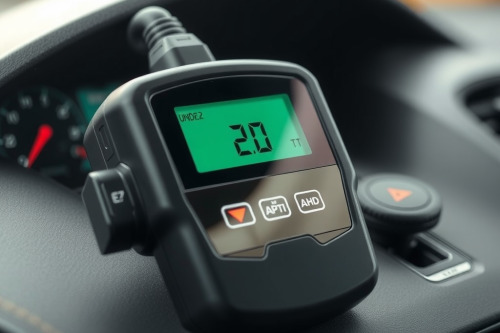
After twenty-five years of busting knuckles in a high-volume repair shop, I know that plugging in a dependable OBD2 Code Reader is the fastest way to stop guessing and start fixing cars. Diagnostic time kills flat-rate speed faster than a stuck caliper, especially when you're chasing intermittent electrical faults across complex module networks. Pulling DTCs is only the first step, because raw fault codes rarely tell the whole story without live sensor data. Hooking up your rolling cart to the vehicle network lets you spot failing sensors before throwing expensive OEM parts at the customer ticket.

Understanding data streams with an OBD2 Code Reader
Connect your VCI dongle under a heavy dash on a cold morning, and the tactile click tells you the hardware is talking to the PCM. You watch the backlit display light up under direct sunlight while searching for long-term fuel trim numbers.
Lean codes like P0171 often send flat-rate techs down a deep diagnostic rabbit hole. A vacuum leak alters mass air flow sensor readings, forcing the engine control unit to dump extra fuel to compensate for unmetered air.
Diagnosing CAN-bus faults with an OBD2 Code Reader
Modern vehicles rely on high-speed CAN-bus architecture to communicate across multiple control modules. When a module drops off the network, your diagnostic tool might freeze during a bus scan or spit out generic U-codes.
Just last Tuesday, I had a stubborn Ford F-150 in my bay with an intermittent misfire on cylinder four. The freeze frame data stored inside the PCM showed elevated knock sensor voltage right before the ignition coil dropped out, pointing straight to a burnt wiring harness near the exhaust manifold.
Real world troubleshooting on the shop floor
Software glitches occasionally plague aftermarket scan tools, particularly on newer European platforms with strict firewall security. I've seen cheaper diagnostic units drop bluetooth connection right in the middle of a critical steering angle sensor recalibration.
Knowing the physical limits of your diagnostic hardware prevents wasted bay time and customer comebacks. Always check system voltage with a multimeter before executing active component tests or reflashing control modules.
Live data PID analysis and fuel trim tricks
Watching live PID data stream across your screen gives you a real look inside the combustion chamber. Oxygen sensor voltage sweeps should swing rapidly between 0.2 and 0.8 volts during closed-loop operation.
Lazy upstream O2 sensors produce sluggish response curves, leading to poor fuel economy without setting an active check engine light immediately. Tracking fuel trim values under load helps separate fuel delivery issues from ignition misfires.
Reframing diagnostic workflow to prevent comebacks
Every seasoned tech knows that verifying the repair is just as vital as finding the root cause. Clearing DTCs without driving the vehicle through a complete drive cycle leaves pending codes waiting to trigger another customer complaint.
Run active monitor checks to make sure catalytic converter efficiency and evaporative emission systems pass self-tests before handing the keys back to the service advisor.
Choosing shop equipment to stop wasting bay time
Investing in a heavy-duty OBD2 Code Reader pays for itself within the first few billable diagnostic hours. Look for rugged rubber casing, fast boot times, and detailed / complete live data graphing capabilities.
Stop guessing on troublesome electrical faults, grab your OBD2 Code Reader today, and start pulling true live data to maximize your daily flat-rate speed.