
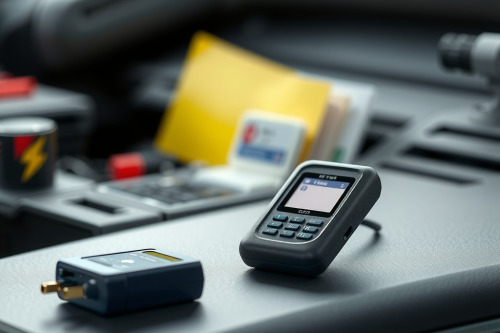
After twenty-five years of pulling codes and busting knuckles in a busy shop, I know that choosing the Best OBD2 Scanner for Your Vehicle needs is the difference between a quick repair and an endless diagnostic rabbit hole. A cheap code reader might clear a light on your dash, but it'll leave you stranded when CAN-bus communication drops or fuel trim data gets chaotic. We need professional tool performance that reads freeze frame data, runs bidirectional testing, and delivers accurate live sensor feedback without glitching. Here's how you cut through the marketing fluff and choose the exact scan tool that keeps your bay turning vehicles efficiently.

Understanding diagnostic levels when selecting the Best OBD2 Scanner for Your Vehicle needs
Every flat-rate tech knows the headache of plugging in a tool only to get generic powertrain codes that reveal nothing useful. vehicle diagnostic tools range from simple code scrubbers to advanced factory-level interfaces. A basic tool pulls global OBD2 codes like P0300 for a random misfire. It stops right there, leaving you guessing whether you have a bad coil pack, a vacuum leak, or a clogged fuel injector.
Professional work demands deep access to proprietary manufacturer protocols. You need a tool that reads body, chassis, and network control modules alongside engine management. When an anti-lock braking light or airbag warning pops up, low-end readers go dark. Selecting the right diagnostic unit means ensuring complete coverage across all electronic modules on your rolling cart list.
Basic code readers versus full bidirectional scan tools
Read-only scanners show live data streams, but they can't command vehicle actuators to perform physical tests. Last Tuesday, I had a stubborn Ford F-150 in my bay with an intermittent cylinder four misfire. The live sensor stream showed fuel trim spiking positive, but I couldn't confirm if the injector was sticking mechanically without toggling it directly.
I plugged in my main diagnostic tablet, hooked up the wireless VCI dongle under the heavy dash, and commanded the injector pulse directly through the tool interface. That bidirectional control instantly isolated a faulty driver circuit inside the engine control unit. Without active test functions, you are stuck swapping parts on the customer dime and risking costly comebacks.
Bidirectional testing saves billable bay time by proving mechanical component operation on demand. If you want to cycle an evaporative emissions purge valve, bleed an anti-lock brake pump, or command an electronic throttle relearn, a standard code reader is completely useless. Investing in active component control is what separates real troubleshooting from expensive guessing.
Important hardware and software features that prevent comebacks
Hardware durability matters just as much as software coverage when you are working on grease-covered shop floors. A diagnostic tablet needs a rubberized outer boot to survive dropping onto concrete, plus a screen bright enough to view under direct sunlight outside the bay door. Tactile feel on physical buttons or high-glove touch responsiveness keeps your workflow smooth when your hands are slick with engine oil.
Software stability is critical during high-stakes service procedures. I remember when my old budget scanner dropped its wireless connection mid-reflash on a Chevrolet steering angle sensor, bricking the module calibration instantly. Look for scan units featuring dual-band Wi-Fi, high-capacity lithium batteries, and direct wired USB options for stable ECU recalibrations.
Evaluating build quality and real-world shop durability
A glossy marketing display looks great on paper, but field performance depends on bus protocol processing speed and multiplexer relay quality. Modern vehicles rely on high-speed CAN-bus architecture, Ethernet, and CAN FD protocols that overwhelm older diagnostic hardware. Slow processors drag down live data graphing, making it impossible to catch short ignition glitches or transient oxygen sensor drops.
Pay close attention to manufacturer update schedules and hidden subscription fees. Some scan tool vendors cut off diagnostic functionality completely if you don't pay annual software renewals, while others simply freeze the tool at its current coverage level. Transparency about updates, vehicle coverage lists, and hardware component reliability keeps your shop profitable without surprise operational costs.
Matching diagnostic capability to your specific repair workload
If you run a high-volume repair shop, buying a single handheld tool will bottleneck your workflow. DIY mechanics and mobile techs might get away with a compact Bluetooth dongle paired with a smartphone, provided it supports full-system scanning. Professional bays require dedicated diagnostic tablets capable of topology mapping to visualize network fault chains at a glance.
Network topology views show every module status across high-speed and low-speed communication networks simultaneously. When a bad gateway module pulls down an entire CAN line, a visual topology map isolates the dead node in seconds. Choose hardware that matches your daily repair depth rather than overpaying for high-end ECU coding features you will never touch.
Final verdict on choosing the Best OBD2 Scanner for Your Vehicle needs
Selecting the Best OBD2 Scanner for Your Vehicle needs comes down to honest evaluation of your repair tasks, vehicle mix, and shop budget. Don't get blinded by flashy user interfaces or endless feature claims that fail in daily service practice. Inspect tool update policies, verify active component control features, and choose a unit built to handle harsh garage environments.
Order a scan tool with verified bidirectional capability, sturdy housing, and complete system coverage from a trusted tool vendor today. Equipping your bay with the right diagnostic unit eliminates guesswork, protects your flat-rate efficiency, and prevents frustrating customer comebacks for good.